Some positive developments during the Depression
The Special Areas Act (1934)
This was a key approach introduced by the government to provide help for the areas worst hit by the Depression.
The Act appointed two commissioners to oversee grants of £2 million (worth approximately £130 million today) to encourage companies to move into special areas. By 1938, over £8 million had been spent, but only an estimated 14,900 new jobs had been created. The act also encouraged retraining and supported workers moving to other towns.
The idea was that factories would be located together to form a trading estate. The largest of these, built in June 1936, was the Trefforest Industrial Estate located between Pontypridd and Cardiff. By 1939, only 2,500 workers were employed there. The new light industries on these estates could not absorb all the unemployed from the coal mining and ship building areas. However, the government continued to invest in the industrial estate, and by 1945 there were 16,000 people working in the Trefforest Industrial Estate.
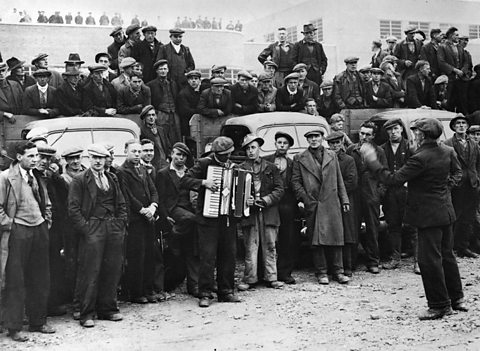
There were some positive changes made for some British people during this tough era. Local councils built 500,000 council houses which pumped money into the economy.
However, only people who were middle or upper class benefitted, or areas that were not significantly affected by the Depression. Some people, especially in the south of England, become more affluent during the Depression.
Benefits for affluent people
Hire-purchase - buying on credit, buy now pay later allowed people to get luxuries 'on the never-never'
Prices fell in the Depression, which meant more money for luxuries
Family sizes fell, which meant more money for luxuries
Improvements at work such as the reduction of working hours, holidays with pay
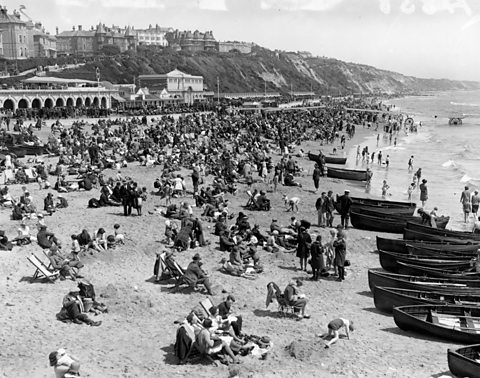
Seaside towns became more popular holiday destinations. This photo shows a crowded beach in Bournemouth, 1931
Three million new houses were built in the 1930s. There was a 1,200 per cent increase in homes with electricity
Huge increase in car ownership
Vacuum cleaners, washing machines, radios and the first TVs
Better leisure such as cinema, dance halls, swimming baths and football matches
Free school milk was introduced after 1934