The Beveridge Report
In 1941, the Liberal politician William Beveridge set out to discover what kind of Britain people wanted to see after the war.
His report, officially entitled Social Insurance and Allied Services, was a key part of the plans to rebuild and improve Britain after the war had ended.
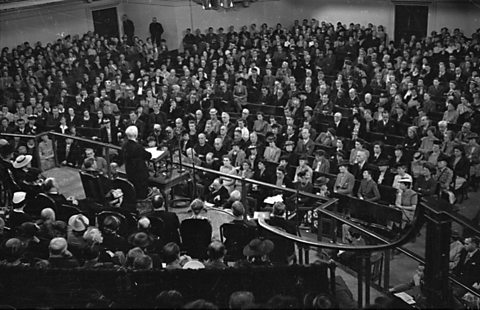
As a result of this research, he declared that there were five giants on the road to reconstruction
. These were:
- want – an adequate income for all
- disease – access to health care
- ignorance – a good education
- squalor – adequate housing
- idleness – gainful employment
To help make a better Britain and to tackle these five ‘evil giants’, he proposed setting up a welfare state.
Why did so many politicians and people want to establish a welfare state?
People had sacrificed so much during World War Two, they believed they had fought for a better future and deserved it for their contribution to the war. Many believed in a fairer society with:
- free medical care
- old age pensions
- affordable housing
The idea was to offer people a safety net from the cradle to the grave
. It was a key Labour Party policy, as promised in the 1945 election campaign.