Campaigns and appeals
There were two major appeals during the war to show how Information, often biased or misleading, designed to persuade people to adopt a particular point of view. could be used to help Britain cope.
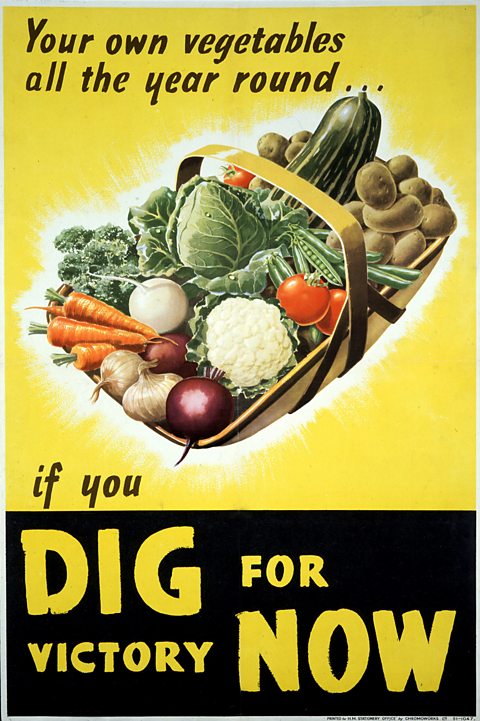
Dig for Victory
The Ministry of Food wanted people to waste less food and to grow their own. This would also help them cope with rationing.
This campaign urged people to use any spare land to grow vegetables. Parks, golf clubs and, more notably, the moat at the Tower of London were used.
People were asked to turn their flowerbeds into allotments. Recipes were also given out suggesting new ways to cook vegetables, including ‘curried carrot’ and ‘carotade’.
By 1943, there were 3.5 million allotments in Britain and over a million tonnes of vegetables were produced.
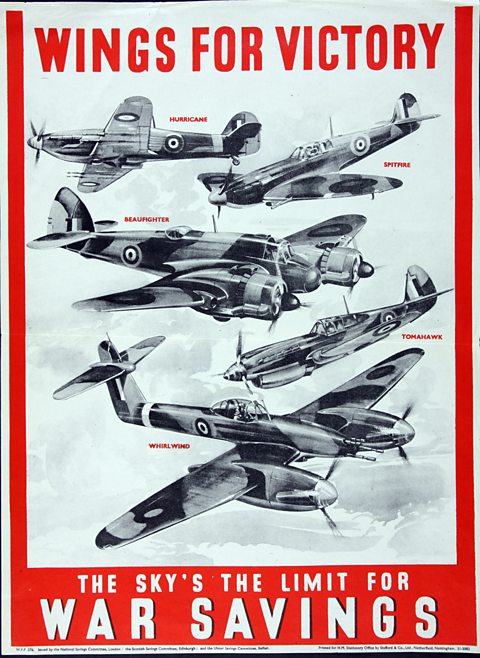
Spitfire Fund
Appeals were created to encourage people to give money towards the production of the exciting and popular Spitfire planes.
Local newspapers listed the people and groups who had donated. In fact, almost every big British town had their names on Spitfires to show how they had generously donated.
This would have made people feel they were part of the war effort and the images of the fundraising events were cleverly used as propaganda.
Use of the Welsh language by the Government
There were over 40,000 Welsh people who could not speak English, and Westminster recognised the need to publish and broadcast propaganda and other information in Welsh.
During the war, the BBC broadcast 20 minutes a day in Welsh, which was mostly news, talks, children's programmes and religious services.