Reaction to the reforms of the post-war Labour Governments
The reaction to these reforms did vary - some were believed to be successes and some were seen as failures.
Successes
- The NHS brought free health care to all
from the cradle to the grave
, including those who could not afford it. - The 'Homes for All' policy led to new towns, such as Cwmbran, and many families benefitted from the prefabs.
- Education was granted to all for free.
- Nationalisation provided improved working conditions in key industries for many.
Shortcomings
- The NHS was unpopular with many doctors and it was seen as running at an enormous cost.
- 'Homes for All' did not meet its expected ambitious targets.
- '11-plus' education tests were seen as unfair by many, and a number of Labour members wished for a comprehensive school structure where pupils of all backgrounds and abilities were together.
- Nationalisation was seen as protecting declining industries, and at a cost.
Other aspects
- Despite these reforms, Labour only narrowly won the 1950 election.
- Rationing of goods was still in place five years after World War Two had finished.
- Reforms had led to a rise in taxation for many people.
- The Conservative Party challenged the nationalisation of the steel industries, and the Labour party was becoming weakened by differences within.
- Another election was called in October 1951. The Conservatives won the election with Winston Churchill returning as Prime Minister.
- Despite the change in government, the A state (or country) where the government provides welfare benefits, such as education, health care and unemployment payments, to its population free at the point of use, although they are paid for by general taxation. remained in place.
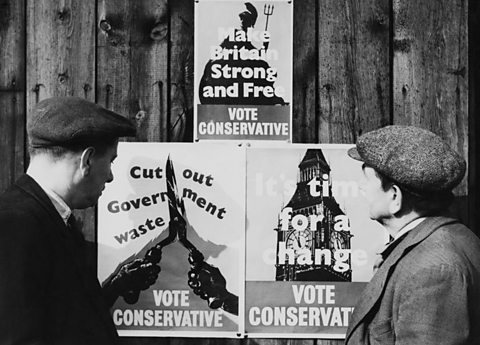
Conservative Party poster, 1951