Nationalisation of the key industries
Nationalisation was the Labour Party’s idea of putting the control of the main industries in the hands of the people, instead of a small group or shareholders.
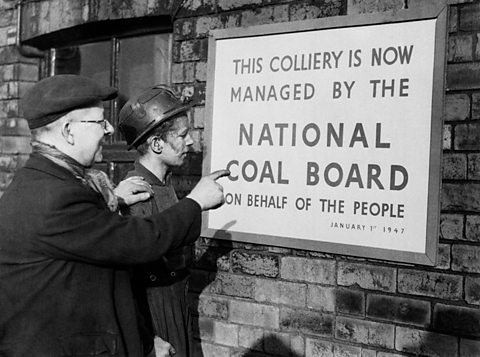
Nationalisation of the coal industry, January 1947
This appealed to many workers who felt that previously employers, such as coal owners, were more interested in profit than the interests of their workers. 850 colliery owners were compensated with £164 million.
Labour's reasons for nationalisation of industry were:
- to increase efficiency in the key industries and help modernise them
- to lower prices and lead to more jobs
- to further the status of workers and improve working conditions
- to put workers and consumers before profit
Was nationalisation a success or failure?
Success
- 1 in 10 British people worked in these nationalised industries.
- Output increased in several industries, for example coal.
- Working conditions in the coal industry improved as workers benefitted from paid holidays and sickness pay.
- Railway lines now linked the more remote areas together. Private companies would have seen this as a non-profit making idea and so may have avoided it.
- More countryside areas were electrified under this new ownership.
Failure
- The Government paid £2700 million in compensation to the previous industries.
- The Conservative Party criticised the whole process, saying central government had too much control.
- Many people believed the process artificially helped declining industries.