We’ve all been there. You’ve lovingly prepared a home-cooked meal for your family and your child refuses to eat it. You get frustrated, your child becomes more determined not to eat, and it leads to stress for everyone.
But what lies behind your child’s refusal to eat, and what can you do about it? Read on for tips on reducing pressure and having more fun at family mealtimes.
Why does my child refuse to eat?
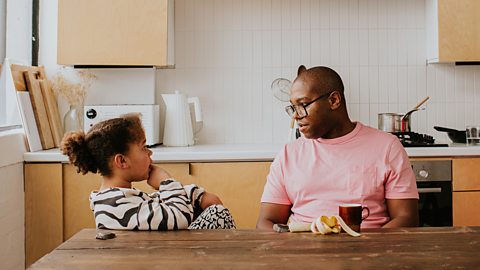
Having a child who refuses to eat certain foods, or try new foods, can be frustrating and worrying as a parent, but it’s a common stage of development for many children, and usually nothing to worry about long term.
A recent study that appeared in the Journal of Child Psychology and Psychiatry suggested that 'fussy eating' tendencies had more to do with genetics than parenting styles.
Children with special educational needs and disabilities (SEND) such as autism can sometimes experience sensory difficulties when it comes to food. You can read our article about eating happily with autistic children for more tips on how to help them.
Many parents still use the phrases ‘fussy’ or ‘picky’ eating, however dietitians, clinicians and parents whose children have difficulties with food are now trying to find alternative labels for this, because it doesn’t cover the broad range of reasons why someone may refuse food. A lot of young children don’t like tasting new and unfamiliar foods – this is called food neophobia. Some children may have a negative association with eating because they’ve experienced an illness, an allergy or some sort of pain or discomfort after eating. And some children may be sensitive to certain sensations such as smell, touch and taste.
Mum Elaine, who was part of a Parents' Toolkit focus group on children’s eating habits, says: “I think “fussy’ is not a good word to use in my situation. My children won’t eat certain foods due to texture or hypersensitivity to smell – they have no control over this.”
The NHS website says: “Do not worry about what your child eats in a day or if they do not eat everything at mealtimes. It's more helpful to think about what they eat over a week.” If your child is active, they seem well and they’re growing appropriately, then they're likely to be getting enough to eat.
The NHS advises trying to feed your child food from the four main food groups:
- Fruit and vegetables.
- Potatoes, bread, rice and pasta.
- Dairy or dairy alternatives.
- Beans, pulses, fish, eggs and meat.
How do I encourage my child to eat?
Some children are learning to understand boundaries and look for patterns – for example they may regularly refuse to eat a meal to see if we will offer an alternative instead. These patterns can develop into a habit that stays with them into later life. If they feel pressured to stay at the table until they’ve finished their meal, they may take a negative association with family mealtimes into their adulthood.
Use the strategies below around creating a positive mealtime environment to make preparing and eating food an enjoyable experience for your child. Try to avoid reward or punishment phrases like ‘If you eat all this up you can have a treat afterwards’ or ‘If you don’t eat your meal, you won’t get pudding’. Encourage your child to understand their own hunger and fullness cues too, by eating until they’re full, rather than using phrases like ‘you need to eat everything on your plate’. Habits can be hard to break, especially patterns of speech we heard when we were young. Start small and build, and celebrate the small wins. Try not to be too hard on yourself.
Video: Families share their personal experiences
Abi to children: "You like carrots too? Do you want some cheese?"
Abi: "Pressure is exactly we have, you know, it's a struggle that we have had, so it was quite revolutionary to me to, you know, to see all of this and to see that there is things that we haven't tried that could potentially work to, to make it a happier time for us over dinner."Abi to children: "Say cheese?"
Andrew: "Yeah, there can be pressure to make sure that every meal is, you know, restaurant quality, full of veggies and, and it's just not possible really. I mean, you can try your best. Um, but there's, there's so many, um… Okay. But there's so many constraints, you know, money, time, all, all sorts of things like that."
Danilo: "Since like, he was very little, he was very interested with the um, southern fried chicken for some reason. You say, I mean, how can I make him eat what I eat, 'cause that will be ideal. And the problem is that at some point, if you start like pushing him and pushing and pushing, he may, you may get the opposite effect. I mean, you may get the effect that he gets upset. He doesn't want to eat."
Abi: "With my daughter, my eldest, it's the speed of her eating. It's her controlling what she wants to eat, you know, when she wants to eat it, and just kind of getting distracted when she's eating as well."
Priya to Anu: "Just a little bit more. Thank you. Yeah, I think that's enough. Thank you."
Priya: "During meal times, we usually, um, put a portion in her plate and expect her to finish that And if she doesn't want anymore, I kinda tell her like, you know, I'll give you a reward. I'll give you a sticker if you finish it, or I'll give you a chocolate. I learned that even giving rewards is a kind of pressure. Um, so that was a surprise. I started not, uh, doing that. Uh, like no more rewards, just, uh, let her choose her, uh, portion size and uh, if she's done, she's done."
Abi: "I think the more I was pressurising her before, the more stressed it would get me. Then she's got her backup and, you know, it just kind of, she's no longer in the mood to be eating. After kind of reflecting and using those, um, options from the pack that we had seen to try, it did make it that bit easier. And they are things that we have continued to do since then."
Andrew: "I mean, I've learned, try and take the pressure off. Do the best you can, and that's all you can do really."
At some point if you start pushing him and pushing and pushing, you may get the opposite effect, that he gets upset, he doesn’t want to eat. – Danilo, father of Daniel
Clinical psychologist Dr Danielle Grey from The Purple House Clinic in Birmingham says: “Fostering a healthy relationship with food is important and will help children have a positive relationship with food as they make the transition to adolescence and adulthood.” This means thinking about how our children feel when we talk about food and when they eat with us, and trying to create a relaxed, fun atmosphere at the dinner table.
Getting your child to eat at mealtimes can be challenging. Here are some practical suggestions to encourage them (please note that if your child has ARFID then these may not be appropriate):
Create a positive mealtime environment
- Establish a routine: Serve meals at the same times every day to create a sense of predictability.
- Minimise distractions: Turn off the TV and put away toys and electronic devices to help your child focus on eating.
- Make mealtimes enjoyable: Keep the atmosphere relaxed and positive. Avoid pressuring your child to eat, which can create anxiety.
Encourage participation
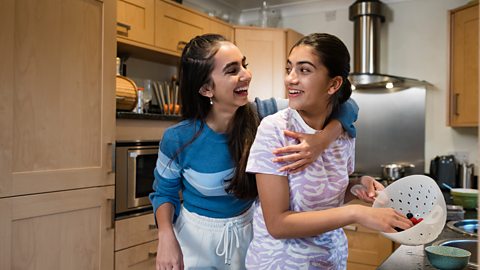
- Involve your child in food preparation: Let them help with simple tasks like washing vegetables, stirring or setting the table. This can make them more interested in the food.
- Offer choices: Give your child some control by offering a choice between two options.
Encourage positive eating habits
- Model healthy eating: Eat a variety of foods yourself. Children often mimic the eating habits of adults.
- Avoid bribes: Instead of using sweets as rewards for eating, offer praise and encouragement.
Introduce new foods gradually
- Follow the 15 top tips below for ways to introduce new foods gradually.
Make food fun
- Make fun shapes: Cut fruits and vegetables into fun shapes or arrange them into a smiley face on the plate.
- Dips and sauces: Offer dips like hummus or yoghurt to make vegetables more appealing.
- Play Food Bingo activities: Download our free Meal Bingo and Snack Bingo templates and play with the whole family to get inspiration and see who can call bingo first!