There are over 600 species of wild bird living in the UK, many of which can be found in the hills, fields and forests of our countryside, each one with their own song and appearance. But can you tell a robin from a blackbird? Or a wood pigeon from a collared dove?
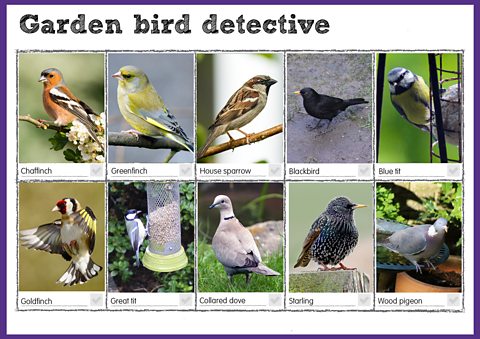
This activity, created in partnership with The Wildlife Trusts, can help your child learn what kind of birds they're likely to see on an outdoor adventure, and how to identify them by their song. There's also a bird spotting sheet you can download and print.
Try our quiz

Why do birds sing?
Sitting outside on a sunny day, you're very likely to hear a bird singing.
Why, you might wonder, do birds sing? And why do they have so many different voices?
Well, birds' voices are special, because instead of a larynx (voicebox) like us humans, they have what is called a syrinx. This syrinx allows them to produce two different notes at the same time, which is why birds have such distinctive songs.
In the UK most of the singing is done by male birds (unlike in the tropics where the females do much more) and they do so for two reasons - to impress the female birds, so they are chosen as a mate, and to ward off rival males from their territory, often by sounding big and imposing.
Springtime is the best time to hear bird song, as the breeding season is just starting, but there is still plenty to hear throughout the year!
Discover UK Nature Reserves and Birdwatching Activities for Families
The Wildlife Trusts care for 2,300 nature reserves all over the UK, providing inspiration and education about the natural world. They also work with others to manage their land with nature. Their Wildlife Watch collection has plenty more nature activities for families to try.
Additionally, the RSPB runs the Big Garden Birdwatch to help identify how our garden birds are doing each year.