The Black Death - overview
In 1348, a terrifying new disease was sweeping through Europe. It is now generally known as the Black Death. It was far more devastating than other An infectious disease which spreads rapidly to a large number of people in a short period of time. that regularly hit Britain, such as ergotism and dysentery.
Arrival and spread
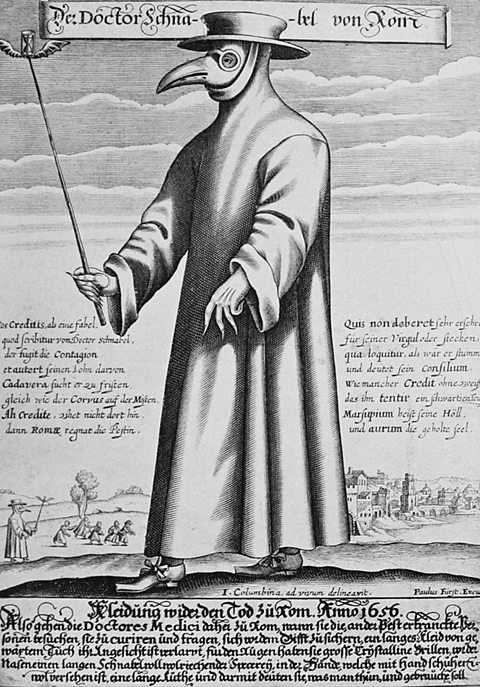
Medieval people called this new disease ‘the Great Pestilence’. Historians now agree that it was bubonic plague. People were infected when they were bitten by a flea carrying the plague germ. The fleas carrying the germs lived on black rats, which infested the ships on trade routes between Asia and Europe. The rats came ashore off the ships and spread the disease inland. Some historians also think that fleas on humans, as well as body lice, may have carried the germ and helped to spread the disease through bedding and clothing.
There were also two other variants:
- pneumonic plague, which spread through coughing and sneezing
- septicaemic plague, which killed its victim through the bloodstream
However, these variants did not affect so many people. Most people who were infected suffered from bubonic plague.
Symptoms
The bubonic plague caused:
- hard, painful swellings called buboes underneath the skin, underneath the armpits and in the groin
- a high temperature
- severe headaches
Victims usually died within a few days. It is estimated that two out of three people who caught the Black Death died from it.
Impact
It is thought that the death rate among the population as a whole was somewhere between 35 and 60 per cent.
The disease spread rapidly. Ordinary life became impossible and local communities found it extremely difficult to cope.
- Priests and local churches could not keep up with visiting the dying or providing funerals. Victims were often buried together in mass graves.
- In towns, many people shut themselves inside and threw waste outside their houses. Sometimes bodies were thrown on the street too.
- Lodgers displaying any symptoms were thrown out of houses.
- People left the towns when the disease hit, if they could afford to do so.