Educational opportunities to all children
The 1944 Education Act set the school-leaving age at 15 years old, and introduced free secondary schools. Education was now offered to all children of all backgrounds, instead of only those who could afford it.
During the final year of primary school pupils sat an exam called the '11-plus'. The result of this exam, which was similar to an IQ test, determined which school they would attend:
- grammar school for academic pupils
- secondary modern school for the teaching of practical subjects
- technical school to learn practical skills
This strategy was not perfect because grammar school pupils were more likely to go to university. Sitting a life-defining test at such a young age was a challenge for many pupils. Grammar schools had better resources, more skilled teachers, and were more academic than the other two schools.
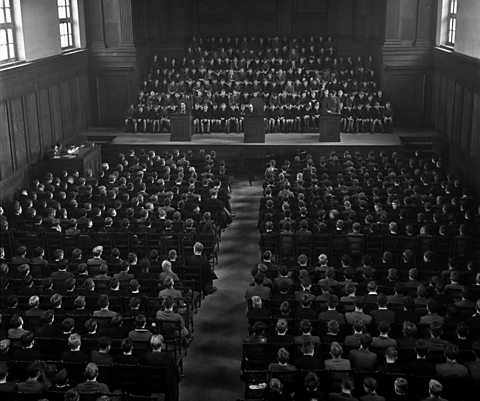
Pupils gather for morning prayer at Manchester Grammar School, 1950