Information leaflet
Information leaflets normally focus on a particular subject. In leaflets it’s not just the content and language that’s important, but also the layout and organisation.
It is unlikely that you will answer a question about a leaflet in your exams. This example has been included here because you should revise using a wide range of text types.
Take notice of how non-fiction texts all around you achieve their purpose and appeal to their audience!
Example
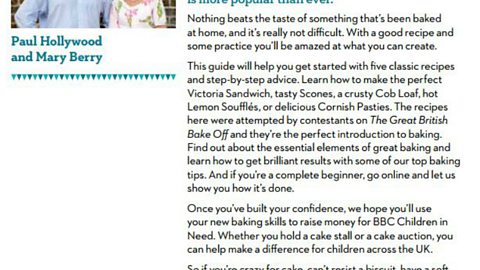
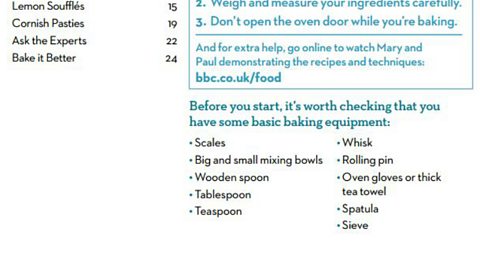
Here is a leaflet from the BBC Children In Need charity.

Image caption, Get baking
1 of 3
End of image gallery
Analysis
Key features of this leaflet include:
- The heading of the leaflet uses Language that commands or instructs the reader. language to give the reader a direct command – “Get Baking!” The subheading “to help you get baking” suggests that the intended audience are people who are new to this activity.
- The opening ‘welcome’ message from celebrity chefs will appeal to fans of The Great British Bake Off. It introduces the purpose of the leaflet – to persuade readers to support the BBC Children In Need charity through baking.
- Sub-headings guide the reader through each section – some information is organised with numbers and bullet points to break down instructions.
- The tone is reassuring to the reader if they are not necessarily an expert “All the recipes in this guide give step-by-step advice to help you bake beautifully”. The The pronouns in English (I, you, he, she, it, we, they, me, him, her, us, and them) showing contrasts of person, gender, number, and case. “you” is direct and inviting.
- The language is enthusiastic - the rule of three highlights the benefits of baking as “relaxing, rewarding and great fun”.
- Assertive language like “nothing beats the taste” and “it’s really not difficult” makes the reader feel they should have a go.
- A range of A describing word. – “perfect, tasty, crusty, hot and delicious” – appeal to the senses, almost making the reader hungry as they imagine eating the food!
- A fun tone is reinforced by A sound feature; the repetition of the same sounds (mainly consonants) usually at the beginning of words. – “crazy for cake”, “soft spot for bread” and “passion for puddings” – which builds up to the whole purpose of the text.