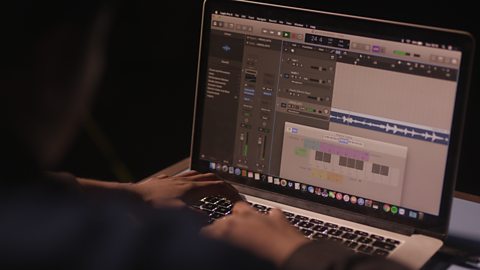
Sound effects, sourcing, underscoring and mixing
When designing sound, there are several aspects to consider, including:
- The artificial reproduction of sound.
- Sound the characters can hear within the world of a play, eg the radio. or Sound that exists outside of the world of a play, eg narration.
- live or recorded
- The locating of sound effects and music.
- The use of music under dialogue to help create an atmosphere or to convey a theme.
- Layering of one or more sounds to make a soundscape.
Sound effects
Sound effects are the artificial reproduction of sounds that help to create realism on stage, eg the sound of a window smashing.
Diegetic or non-diegetic
Diegetic sound is sound that a character can hear within the world of the play. For example, when a character turns on the radio, the voices or music from it are heard by the character and the audience. Non-diegetic sound is sound that exists outside the world of the play. The audience can hear the sound but the characters cannot, eg a The retelling of a story. or underscore.
Live or recorded
A sound designer, in consultation with the director, will consider whether to include the use of live music and sound effects either instead of or in addition to pre-recorded sound. This decision will depend on the style of the show and the budget.
Sourcing
Sourcing is the process of locating or producing an effect or a piece of music, eg using online music libraries.
Underscoring
Underscoring is the use of music underneath dialogue to help create an atmosphere or to convey a theme.
Mixing
Mixing is the process of layering one sound with another. This can be done live or pre-recorded. For example, a Place, time, mood and atmosphere can be created with recorded or live sound using instruments and/or the voices of the performers onstage. could include a sound effect of rain on a window mixed with whispered voices.