Types of joint movement
The different types of movement that are permitted at each joint are described below.
Flexion – bending a joint. This occurs when the angle of a joint decreases. For example, the elbow flexes when performing a biceps curl.
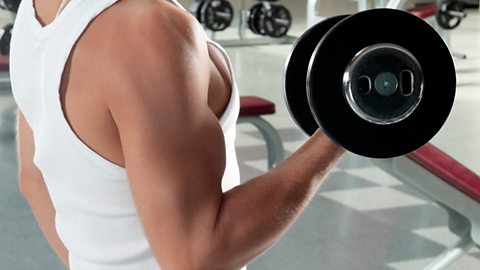
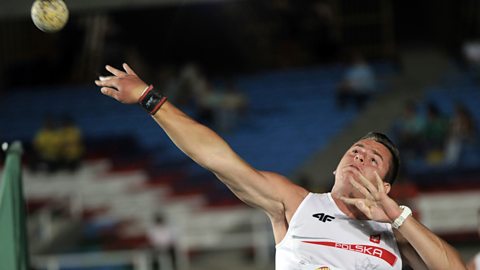
Extension – straightening a joint. This occurs when the angle of a joint increases, for example, at the elbow when putting a shot.
Abduction – movement away from the midline of the body. This occurs at the hip and shoulder joints during a jumping jack movement.

Adduction – movement towards the midline of the body. This occurs at the hip and shoulder, returning the arms and legs back to their original position from a jumping jack movement.
Circumduction – this is where the limb moves in a circle. This occurs at the shoulder joint during an overarm tennis serve.

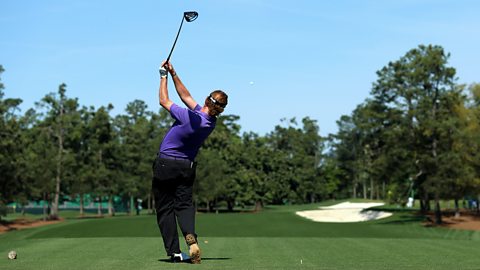
Rotation – this is where the limb moves in a circular movement around a fixed joint towards or away from the midline of the body. This occurs in the hip in golf while performing a drive shot.
The table summarises the body locations and types of movements associated with each type of joint.
| Type of joint | Body location | Types of movement |
| Ball and socket | Hip, shoulder | Flexion/extension, rotation, abduction, adduction, circumduction |
| Hinge | Knee, elbow | Flexion/extension |
| Pivot | Neck | Rotation |
| Type of joint | Ball and socket |
|---|---|
| Body location | Hip, shoulder |
| Types of movement | Flexion/extension, rotation, abduction, adduction, circumduction |
| Type of joint | Hinge |
|---|---|
| Body location | Knee, elbow |
| Types of movement | Flexion/extension |
| Type of joint | Pivot |
|---|---|
| Body location | Neck |
| Types of movement | Rotation |