
If you’re considering home educating your child, there are a few things to think about, such as how and where you’ll do it, and for how long, plus who you need to tell about what you’re doing.
The BBC Bitesize home education page has helpful information about what is involved and how to go about it, should you decide it’s the right thing for you and your child.
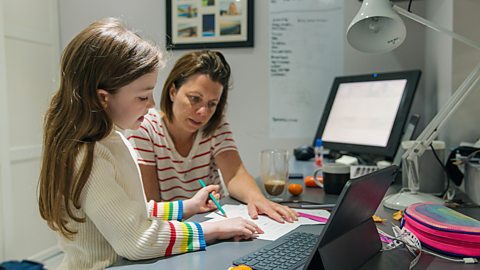
Home education in the UK involves a conscious decision to educate your child outside the school setting. As a parent or carer, you have a responsibility to make sure your child gets a full-time education from the age of five until they reach school leaving age (which is generally when they’re 16). You can choose whether your child attends a private or local authority school or academy, or is educated at home or elsewhere.
‘Elective home education’ (EHE) is the term used by the English, Welsh and Northern Irish governments. It’s defined as a parent or carer choosing to teach their child at home or “in some other way they desire, instead of sending them to school full-time”. ‘Home education’ is the official term used by the Scottish government (not EHE). Some parents and other groups use the phrase 'homeschooling‘ when referring to home education.
Yes, although many organisations and parents now prefer to use the term home education or elective home education (EHE), as detailed above. You’ll ideally need to inform your child’s school if you intend to educate them elsewhere.
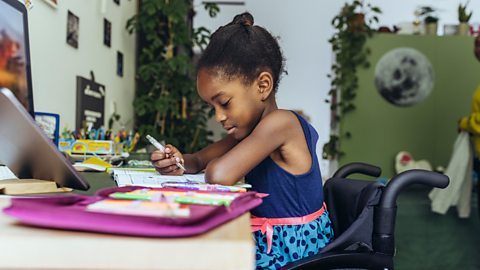
Education other than at school (EOTAS) is when your local authority arranges and pays for your child’s education, if school or college is deemed not appropriate for them. The reasons why will be individual to each child but will include considering things like:
EOTAS – also referred to as education elsewhere than at an education establishment in Scotland – is different to home education, which you must arrange and pay for yourself. EOTAS is usually set up as a temporary measure but can go on for as long as it’s needed.
If you teach your child at home or outside a school setting, you can follow the National Curriculum in England, which is the government’s outline of subjects and standards used by primary and secondary schools so children learn the same things. Similarly, you can follow the Curriculum for Wales, the Northern Ireland Curriculum or the Curriculum for Excellence in Scotland.
Alternatively, you can choose your own way of educating your child, as long as it’s deemed suitable enough by your local authority. A ‘suitable’ and ‘effective’ education is usually defined as allowing your child to reach their full potential and equipping them for an independent adult life, as well as being appropriate for the child’s age and abilities.
You’ll also need to be able to show that home education is being carried out for a significant proportion of a child’s life (similar to full-time schooling), but the Government states that “home-educating parents are not required to:
There are many reasons why parents or carers may decide to home educate their child. Since the Covid-19 pandemic, the number of children being home educated in England has increased to an estimated 92,000, around 1% of all school-aged pupils.
According to a Department of Education (DfE) report in 2023, the top reasons for an increase in EHE at the start of the academic year in England were:
There are different styles of home education you can use, including but not limited to:
Some parents prefer a ‘hybrid’ approach to home education – usually referred to as ‘flexi-schooling’ – where their child is in school for a certain number of days, and home educated the remainder of the week. Schools and colleges will agree to this on a case-by-case basis, and they do have the right to refuse such an arrangement.
Parents or carers may prefer this approach due to part-time working, if they want a balance between what they can teach at home and subjects their children can learn more easily at school, or for the social aspect of their child attending school a few days per week.
There are lots of things to think about when considering whether to home educate your child, including:
Read the guides below for more information on things to consider before you home educate your child.
If you want to find an online network of parents or carers who are home educating their children, you can search Facebook for local groups or national networks. You can also use search engines to look for forest schools near you (which have an outdoor-focused style of learning) and check out local libraries and museums, which may offer home education sessions. You could also start your own support group as a way of meeting like-minded home educators.
The BBC Bitesize home education collection is designed to support you and your child’s learning at home with free resources for early years and foundation stage (EYFS), primary and secondary-age students.
Bitesize Parenting is the go-to place for the whole parenting community to find stories, expert advice and fun activities.
If your child has special educational needs and / or disabilities, be sure to check out the Parenting SEND collection. Bitesize also has a collection of Sensory Stories, an immersive video series that transports you on unique sensory adventures, for children with additional or complex needs.
For more information about home education, these BBC News articles cover the rise in families deciding to educate their children at home and, from 2021, the impact of Covid on home education.