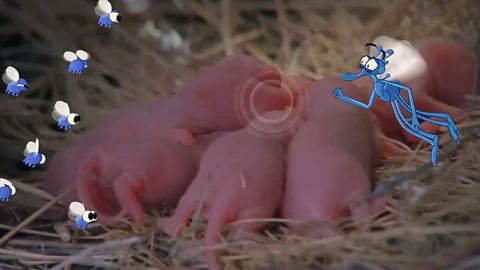
Let's learn how sound travels and how humans hear.
Watch and learn
Video
How does sound help us to communicate?
Title: Communication
Sound has been used for as long as there have been people and animals who want to talk.
When birds sing they are communicating. When a cat meows it could be asking for food. This barking dog is pleased to see you.
Sound travels as a wave through the three states of matter: gas, liquid, and solid.
Sound travels best through solids because the particles are very close together. A knock on a solid door can be heard on the other side.
Sound can travel well through liquids where the particles are further apart. Whales contact each other over huge distances in the ocean.
When we speak our voice travels as vibrating waves through the gas air. Because sound travels less well through air, if your friend is far away, you might have to shout loud to get their attention.
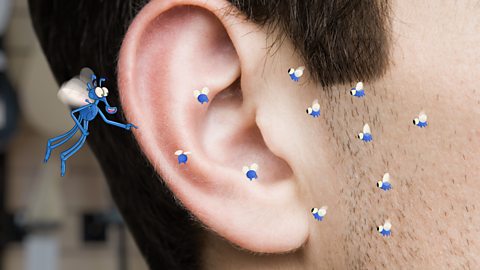
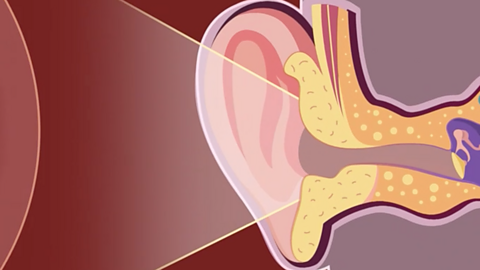
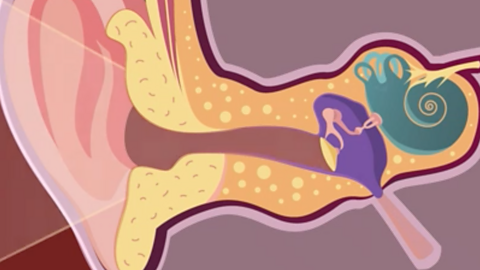
The cupped shape of our ears lets them collect sound waves efficiently and channel them into our eardrums.
Rabbits’ large ears can hear lots of sounds. They can even turn their ears round to listen to sounds from different directions.
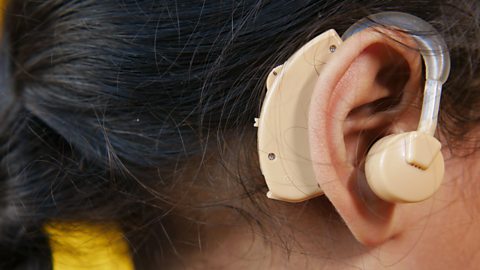
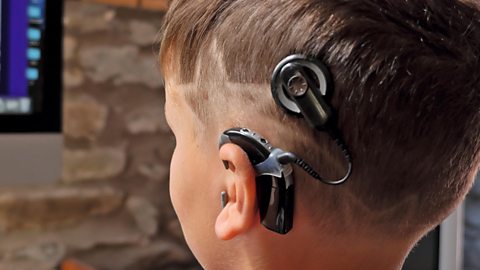
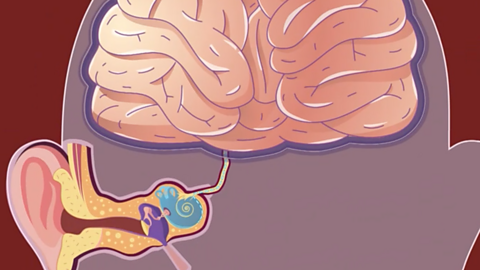
People with hearing loss can use sign language or lip reading to help them communicate with others. This little device is called a cochlear implant. A doctor can fit them to route sound waves directly to the brain of someone who is hearing impaired.
We can use a tuning fork to see sound waves. Here the vibrations are making the waves in the water. Sounds are all around us, communicating information.
How does sound travel?
Sound is caused by vibrations. These vibrations travel as waves through any medium:
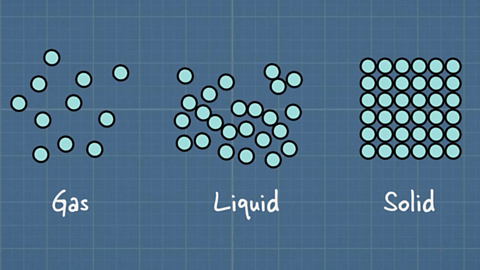
- sound travels best through solids as the particles are so close together
- sound also travels well through liquids where the particles are a bit further apart
- sound travels less well through gases like air where the particles are much more spread out
Most animals (including humans) use some form of sound to communicate with each other, from birds singing, to hippos bellowing, and cats meowing, to children chatting.
Solids

Although sound travels very well through solids, most animals communicate using sound waves through liquid (eg. water) or gas (eg. air).
Snakes don't have outer ears like we do. A snake's inner ear is connected to its jaw bone. This is very sensitive to vibrations that travel through the solid ground.
You can also learn how elephants use vibrations across solid earth to communicate, in our guide: How do plants and animals sense touch and vibrations?
Liquids
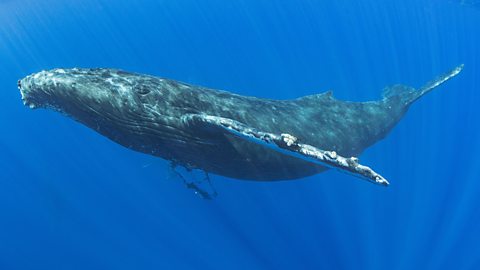
Water is a good A substance that waves can travel through. for sound waves to travel through.
For example, whales can communicate through thousands of miles of ocean.
Gases

Sound also travels through air.
It doesn't travel as well as it does in gases and liquids but human speech and hearing are adapted for it.
How do humans speak and hear each other?

Image caption, Making sound
Humans speak by pushing air out of our lungs through a pair of vocal folds in our windpipe. The vocal folds cause the air to start vibrating and the sound is shaped by the mouth into recognisable sounds such as speech. This sound is transmitted through the air as a wave.
1 of 4