What is Halloween?
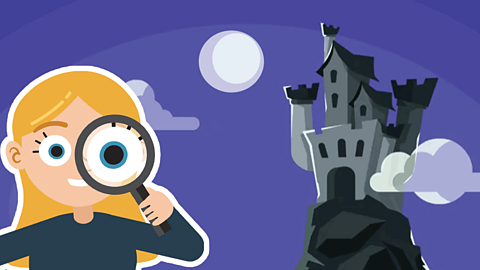
Halloween is celebrated in many parts of the world every year on 31 October.
It is a day where people celebrate all things spooky and mysterious.
The name Halloween comes from All Hallows’ Eve. That’s the day before All Hallows’ Day, a Christian holiday also called All Saints’ Day.
Children and adults often celebrate by dressing up in spooky costumes and going trick-or-treating.
History

The origins of Halloween can be traced back hundreds of years to the pagan festival of Samhain (pronounced Sow-in), celebrated by the Celts of ancient Europe to mark the end of the harvest season and the beginning of winter.
Have a look at the information, videos and activities below to learn more.
Watch - The origins of Halloween
[NARRATOR]Halloween.
Every year, on the 31st of October, people in countries all over the world celebrate the spookiest day of the year – Halloween.
Today, we know Halloween as a day filled with scary costumes, decorations, and sweet treats.
But did you know that Halloween is actually one of the world’s oldest celebrations?
It dates back thousands of years to the ancient Celtic festival of Samhain.
The Celts were a group of tribes who settled in areas in Western Europe – including Great Britain and Ireland.
The Celts celebrated their New Year in autumn, on a day which marked the end of summer and harvest time and the start of a long, dark, cold winter.
They believed that on the night before the New Year, the boundary between our world and another invisible world, where spirits lived, became blurred, and strange creepy creatures like ghosts, ghouls and monsters could roam the land.
So, on the night before the New Year, they celebrated the festival of Samhain to ward off any unfriendly visitors.
They built bonfires, left offerings of food and drink, and wore masks or other disguises to avoid being recognised by the spirits.
Over time, the Christian religion spread across Europe.
The Celtic New Year was replaced by All Saints’ Day – also known as All Hallows’ Day – a holy day in honour of Christian Saints.
And the night before – which was traditionally celebrated as Samhain – became known as All Hallows’ Eve.
The new, Christian All Hallows’ Eve kept many of the traditions of Samhain, but as years passed by, new customs developed.
The masks and disguises of Samhain became costumes.
People started visiting the homes of others to perform tricks, like jokes or poems, for gifts or treats.
In other words, the beginning of trick or treating.
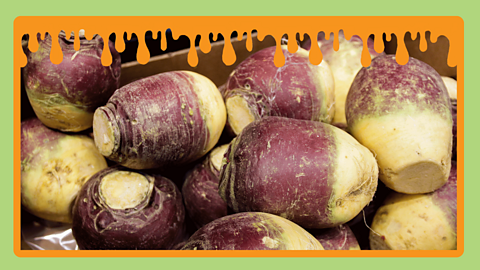
And people also started carving scary faces in vegetables like turnips, beetroots, and later, pumpkins, called Jack O’ Lanterns.
Eventually, All Hallows’ Eve became widely known as Halloween.
Although Halloween is rooted in the religious traditions of the past, for most people today it is simply an opportunity to have some fun.
Some people simply stay at home and watch scary movies or tell ghost stories.
Many people love getting dressed up in weird and wacky costumes to go trick or treating or attend Halloween parties.
“I’m really excited about what my costume is, because it’s quite scary.”
“Oh yeah, what are you dressing up as?”
“A grim reaper.”
Others celebrate Halloween by putting up cool decorations or carving pumpkins to make Jack-O’-Lanterns!
“The first thing you need to do is cut a lid and scoop the inside out.”
“The second thing you have to do is design a scary look for your pumpkin.”
“The third thing you’ve got to do is to get the best tools and start cutting.”
“And then you can show off your pumpkin.”
Whether you’re warding off ancient spirits, celebrating Saints, or simply having fun, Halloween continues to be an important event to many people.
Even our pets get involved from time to time!
Happy Halloween!
Traditional Halloween food
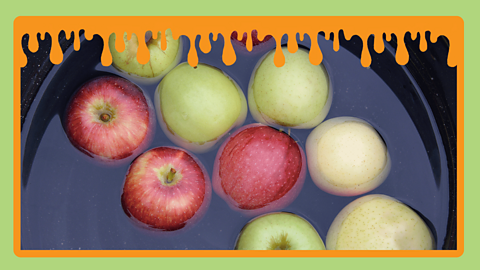
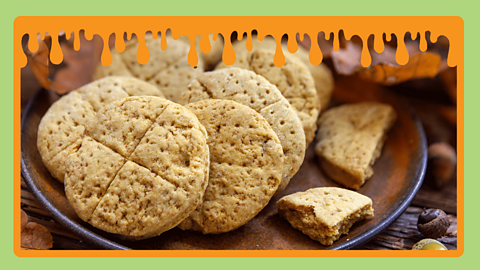
Have a look at this slideshow to learn about some old Halloween traditions with food.
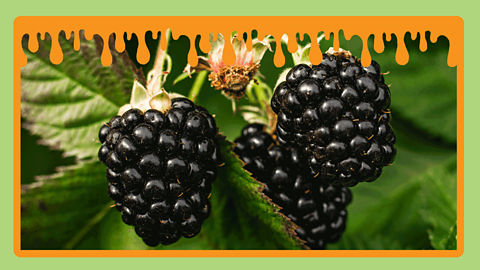
Image caption, Blackberries
People used to think it was a bad idea to eat blackberries after Halloween, because a goblin-like spirit called púca (Irish for ‘ghost’) was thought to come out on Halloween and crawl all over them, covering them in slime!
1 of 4
Discover more on KS2 History
Learn more about the life and traditions of people living in the UK throughout history.