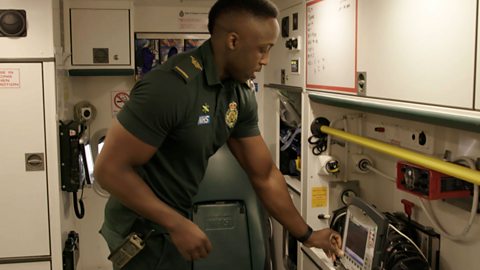
Meet Sara and learn more about life as a community specialist paramedic. Part of our Bitesize world of work series.
Sara: I'm Sara. I'm 47 and I'm a community specialist paramedic. As a community paramedic, I still respond like normal paramedics to emergencies, but that's only part of my role. The other part of my role is to work within the communities to maybe visit frail, elderly patients, frequent callers, or patients that have been identified by the crews who they know that I might be able to refer them to other services.
I'm able to educate people on how to and when to call an ambulance and also when it's not appropriate to call anambulance. And what other services are available for them rather than calling 999. I'm going to a lady who's been referred to me by the crews. They're concerned because she keeps falling out of bed. So I'm just going to make sure that the hospital bed that's been ordered is available to her.
Here's your coffee.
Lady in bed: Ah thanks love.
Sara: Where do you want it. There?
Lady in the bed: I'll tip it all over myself.
Sara: There we go. We don't want that. So I've just come round to see whether your bed had been delivered, but I can see that you've got your hospital bed.
Lady in the bed: I've got my bed. Yes, yes. It makes me feel safer.
Sara: That's good. So how are you feeling today?
Lady in the bed: I get very lonely.
Sara: Ok, I can come and visit you.
Lady in the bed: Oh can you?
Sara: If I'm in the area and if I'm not on an emergency, I can come in and have a coffee with you.
Lady in the bed: Oh, I would appreciate that. I really would.
Sara: Ok. There's some charities in the area as well, who have people who come and just sit and chat with you. Would you like meto see if there's any… anybody like that and I can introduce you to them?
Lady in the bed: Yes, I would. I would like that.
Sara: Is it an eye? A green eye?
Lady in the bed: That's from my husband.
Sara: Oh. It feels good that you can spend a little bit of time with someone and that little bit of company might stop them phoning 999 and taking an ambulance away from someone who might need it in an emergency.
Sara: Hiya John. I've been to visit. They've got the bed and there hasn't been any more calls since she's had delivery of the bed.
John: That's brilliant. That's really good news. Sara is key to the area of Trafford. She takes a lot of the work off us when we'regetting repeated calls from frequent callers. She's a fundamental part of the team and with her years of experience, she's one of the go-to people that we have available here.
Sara: To become a community paramedic, you already have to be a paramedic. You have to go to university and get a diploma or adegree. So, for that, you'll need to make sure you've got your Maths, English and Science GCSEs and a keen interest in healthand social care. I love my job as a paramedic and now being a community paramedic, I love it even more. I feel really privileged and lucky to do the job that I do and enjoy every day that I come to work.
I feel really privileged and lucky to do the job that I do and enjoy every day that I come to work.
Sara was inspired to work in the ambulance service whilst volunteering with St John Ambulance as a teenager.
She's the first member of her family to go to university, where Sara studied Environmental Science
As a community specialist paramedic, Sara responds to 999 calls and also works with patients in the community. She visits frail, elderly patients, frequent callers, homeless people, and people who've been directed to her by other crew members to advise them on what health and social care services are available to them
The difference between her role and that of a paramedic is that Sara helps her patients over a longer period of time and can see them get better