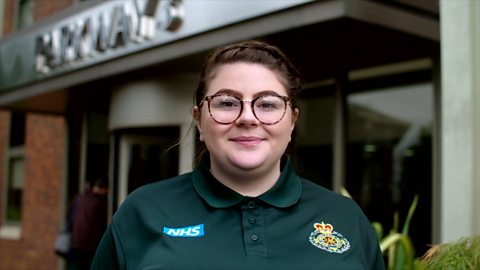
Meet Hannah and learn more about life as a Hazardous Area Response Team paramedic, attending call-outs where patients are difficult to reach. Part of our Bitesize world of work series.
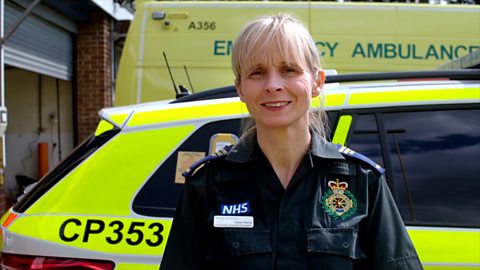
Hannah:I'm Hannah, I'm 29 and I'm a HART paramedic. HART stands for Hazardous Area Response Team. The HART team was set up afterthe London bombing. They developed a team of paramedics that could be trained up and attend these incidents. Somebody may ask for the HART team because they are unable to access the casualty. Patients who possibly may be stuck at heights, in water, fire incidents. We have the knowledge to treat in that area.
Call taker:Someone’s screaming very loud for help. It appears to be coming from the general area of this gas holder. So the HART team have run in.
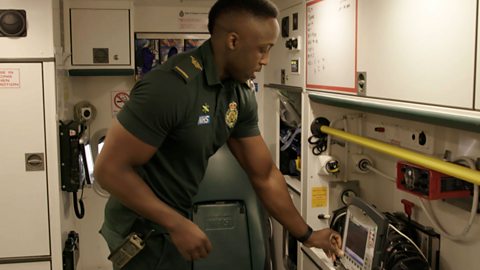
Hannah:Once we are in the scene, we are allowed to get access if the casualty cannot come out. As HART paramedics, we treat patientsbut we don't transport. We would be the ones that would have the kit to get to the patient. This is our breathing apparatus to go intofires. MTFA bags, so this is for the terrorist incidents. We've got our SWAH bags – Safe Working at Heights. The hazardous area jobs can get really challenging, really tough, but I absolutely love pushing myself, putting myself in those situations.
Hannah's colleague:Hannah's calm, cool, collected and most importantly… say when she gets there and she's dealing with the patient, she's fantastic.
Hannah:You've got to keep physically fit within this role, because your health is number one. There's a lot of lifting, shifting equipment, patients about.
To be a paramedic, you have to attend university to become a paramedic initially. I did Applied Science, which then led me on to go to university and do Paramedic Practice. Getting where I am today, definitely not a smooth ride, going to university, the academic side of things, pretty tough for me, but I did it and I got through.
I've always wanted to be a paramedic. I love helping people. I've always been a caring person. If someone was thinking about applying for a HART paramedic, I would absolutely tell them, jump at it, put your all into it and hopefully see you on the team.
The hazardous area jobs can get really challenging but I absolutely love pushing myself.
- Hannah's job involves attending to patients in difficult-to-reach places, such as when they are at heights, or stuck in water. HART paramedics treat patients but don't transport them back to hospital
- She says the job is like a cross between being a paramedic and a firefighter so she needs to be very physically fit for the role
- Hannah studied Paramedic Practice at university to become a paramedic. After three years on the job, she applied to be a HART paramedic, which took an extra two months of intense training
- She loves the challenge of her job, as well as the opportunity to help people.